Sunday, October 12, 2014
Tuesday, December 24, 2013
The Year isn't Over Yet....but What A Great Year!
Being the "prolific blogger" :), I feel compelled to squeeze in one more entry for this year! I''ll do it with pictures.




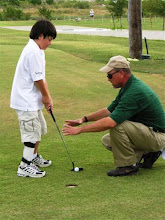
HALO for Freedom Golf Tournament


____________________________________
Camp Joint Adventure for Juvenile Arthritis


________________________________________
Greater Oklahoma Disabled Sports Association Expo, Oklahoma City


___________________________________
Tee up for Teaching Seminar, Scottish Rite Hospital for Children


________________________________________
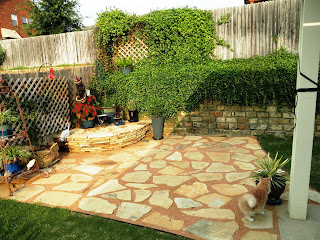
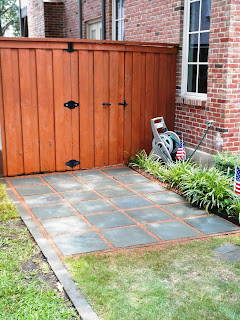
Other Stuff, Wood and Stone Work


AND
Various Award and Trophy Display Cases, All Custom Built
Just like Custom Built Golf Clubs
(not pictured)


Sunday, October 21, 2012
Thursday, August 9, 2012
Camp Joint Adventure
 Golf was introduced for the first time this year at Camp Joint Adventure, the Texas Scottish Rite Hospital for Children camp for patients with arthritis. 95 children, ages 7-15, 105-107 degrees in August, if you can imagine that, and golf! Of course there was swimming, fishing, boating, arts and crafts, etc., but golf made its debut on the softball field and I was pleased to be a part of this addition to camp activities.
To learn more about the TSRHC Learn to Golf program, contact:

Dana R. Dempsey, MS, CTRS
Director, Therapeutic Recreation Department
Texas Scottish Rite Hospital for Children
2222 Welborn St.
Dallas, TX 75219
214-559-7615 officedana.dempsey@tsrh.org
Tuesday, April 19, 2011
Exploiting the Masses!
This cracks me up. In the video these guys don't know the difference between face angle and center of gravity. Yet in the text, center of gravity is printed and center of gravity is not correct. These guys want people to buy this driver and then figure out how to make the adjustments to make better shots? (If you really have to experiment with this contraption, don't pay $500 to do it. Wait a few months and you can probably buy one, nearly new, hardly ever used, off of the trade in rack at your local big box retailer for about $100.)
The proliferation of bad information is alive and well and as long as folks are willing to buy this stuff. Who really cares what the center of gravity and face angle are all about. It is just the business of selling equipment for the purpose of making sales. And it is from this type of sales propaganda that the golfing public receives its equipment education. Shoot, anybody can be a professional club fitter! And a high handicapper at the same time! Just read the article and watch the video. It's all perfectly clear.
Click here for full story and video: BBC News
Even if you did know what you were doing, these adjustable drivers fall short of being able to offer the full benefits of custom fitting for the maximum amount of game improvement (there are 12 basic driver fitting specifications).
Wednesday, March 23, 2011
What I Teach That is Different
Why should anyone come to me for a golf lesson? What do I do that is different? Even if I wrote a book you would still have to experience an individual lesson with me to "get it". That's no fault of yours, it’s just that I am not that "good of a writer". Even though that hasn't stopped many "authors" on the subject, the ailing swings of golfers won't be cured with another useless instruction manual. So,....
What do I do that is different?
I train the mind. The body knows what to do, but will only perform as well as the instruction it receives from the mind. If we focus on doing what is correct, then there is no need for our "focus" to be fractured figuring out what is wrong that needs "fixing". Just do what you know to do that is correct. Hmm..
If you haven’t already done so, browse my web site, please!
The gist: There is no need to make a career out of:
1. Searching for the latest “fix” for your golf swing, although the golf magazines would go out of business if somebody didn't dream up some new “secret” every month;
2. Continually shopping for the latest and greatest golf clubs because the folks who only sell clubs will promise something next year that will eliminate ..... all those par 3 "layup shots", an additional 10 yards off the tee (by my calculations, an extra 10 yards a year for 40+ years....I should be driving the ball 500-600 yards, (accounting for old age of course) or whatever. Duhh...
Learn what to do to swing correctly. Buy custom fit golf clubs. Clubs that do what you need, for the way you play. Then spend your golfing career perfecting what you know to do. That is really what I teach.
Tuesday, March 22, 2011
Teaching the Teacher at TSRHC

 February 21st was the annual Tee Up for Teaching Seminar at the Texas Scottish Rite Hospital for Children. About 30 golf pros and allied health care professionals were in attendance. Everyone received continuing education credit through their respective professional organizations. Great combination of academics and hands on demonstrations. Plan to attend next year if learning more about teaching individuals with disabilities is of interest.
To attend the Tee Up for Teaching Seminar, contact Dana Dempsey, Director of Therapeutic Recreation at the Texas Scottish Rite Hospital for Children, 214-559-7615.


Friday, February 4, 2011
Kyle Lograsso
Many lessons to learn from this 5 year old golfer. My favorites:
- Children, children with disabilities, know no boundaries.
- The capacity of the imitative instinct children possess.
Thursday, February 3, 2011
Cure your Hook! Cure your Slice! Hit it Fat? Here’s the Fix!
These are titles we have all seen to the many golf articles, golf programs, golf tips and golf books professing to be "The Answer to Lower Scores." But there is another approach to better golf. Read on….
Typically these kinds of videos and articles are from: the “Flaw and Fix it” school of thought. This school of instruction focuses on the negative rather than the positive. For example, the negative approach: when a shot is not to our satisfaction we mentally try to figure out what went wrong and how to fix it. This requires analyzing, diagnosing and implementing a “fix”. The “fix” may or may not work depending on the accuracy of our analysis, diagnosis and last but not least our implementation of the "fix". The “fix” is typically something we try to do that is physically different.
The positive approach: when a shot is not to our satisfaction we mentally resort to what we know to do. If our golf instruction and training has been grounded in a “mental concept” of what we need to do to swing the golf club correctly, then we can dismiss the errant shot as “we didn’t do what we know to do” and go on about our business of doing what we know to do. ….that’s a mouthful…..in essence it is knowing what to do, Hmmmm, now I’m just repeating myself…… No analyzing. No diagnosing. No, “I’ve got it, here’s the fix and I hope it works.” The positive approach has more to do with what we do with our minds, is much more focused, clear, clean, and decisive and will be the correction we are looking for. The positive approach keeps our mental game intact. Besides, it is the same answer for our bad shots as it is for our good shots, “That was a great shot, how did I do that?” Hopefully you can answer, “I just did what I know to do.” You do reinforce your good swings and shots, don’t you?!
Knowing what is wrong is not the “diet” of champions when it comes to finding out what is right. There are too many wrong ways and to figure out precisely what went wrong and implement what we think is the fix can be a time consuming, discouraging route of trial and error. Our attention and intentions become “unfocused” as we scroll through the list of physical things “not to do” or the long list of things “to do” to prevent hooking, slicing, topping or whatever. If golf is 90% mental and 10% physical we have just turned those percentages around to 10% mental and 90% physical….our mental game is “toast”.
Learning what it takes to swing correctly is simple and easy, for those who know the difference between simple and easy, so simple that the challenge is one of perfecting the things we know to do, the correct things. Thus, the need for repetition….the same things over and over and over…single minded attention, focused intentions, relentless, clear and decisive in what we know to do, to what we want to do. Every time we swing! That’s the hard part!
So, what do we need to do to make good swings? Find an instructor who thinks and teaches in this manner, 90% mental game, 10% mechanics. Otherwise, trying to figure it out on your own can be like a “do it yourself root canal”, the instruction book in one hand, the drill in the other and here we go. Hope this works!
Typically these kinds of videos and articles are from: the “Flaw and Fix it” school of thought. This school of instruction focuses on the negative rather than the positive. For example, the negative approach: when a shot is not to our satisfaction we mentally try to figure out what went wrong and how to fix it. This requires analyzing, diagnosing and implementing a “fix”. The “fix” may or may not work depending on the accuracy of our analysis, diagnosis and last but not least our implementation of the "fix". The “fix” is typically something we try to do that is physically different.
The positive approach: when a shot is not to our satisfaction we mentally resort to what we know to do. If our golf instruction and training has been grounded in a “mental concept” of what we need to do to swing the golf club correctly, then we can dismiss the errant shot as “we didn’t do what we know to do” and go on about our business of doing what we know to do. ….that’s a mouthful…..in essence it is knowing what to do, Hmmmm, now I’m just repeating myself…… No analyzing. No diagnosing. No, “I’ve got it, here’s the fix and I hope it works.” The positive approach has more to do with what we do with our minds, is much more focused, clear, clean, and decisive and will be the correction we are looking for. The positive approach keeps our mental game intact. Besides, it is the same answer for our bad shots as it is for our good shots, “That was a great shot, how did I do that?” Hopefully you can answer, “I just did what I know to do.” You do reinforce your good swings and shots, don’t you?!
Knowing what is wrong is not the “diet” of champions when it comes to finding out what is right. There are too many wrong ways and to figure out precisely what went wrong and implement what we think is the fix can be a time consuming, discouraging route of trial and error. Our attention and intentions become “unfocused” as we scroll through the list of physical things “not to do” or the long list of things “to do” to prevent hooking, slicing, topping or whatever. If golf is 90% mental and 10% physical we have just turned those percentages around to 10% mental and 90% physical….our mental game is “toast”.
Learning what it takes to swing correctly is simple and easy, for those who know the difference between simple and easy, so simple that the challenge is one of perfecting the things we know to do, the correct things. Thus, the need for repetition….the same things over and over and over…single minded attention, focused intentions, relentless, clear and decisive in what we know to do, to what we want to do. Every time we swing! That’s the hard part!
So, what do we need to do to make good swings? Find an instructor who thinks and teaches in this manner, 90% mental game, 10% mechanics. Otherwise, trying to figure it out on your own can be like a “do it yourself root canal”, the instruction book in one hand, the drill in the other and here we go. Hope this works!
Sunday, January 23, 2011
Saturday, March 20, 2010
Adaptive Golf Pictures
This is just fun! So turn up the volume and go. It never plays the same sequence or lay out.
Create your own video slideshow at animoto.com.
Wednesday, March 17, 2010
Adventure SCUBA Charity Golf Classic
 Adventure SCUBA's 3rd Annual Charity Golf Classic will benefit RISE Adventures.
 Save the date: Monday, September 13th, El Dorado Country Club in McKinney, 11:00 a.m. sign in, lunch and warm up on the range, 1:00 p.m. Shot Gun start, dinner and awards banquet afterwards.
Registration, sponsor and contact information can be found on Adventure SCUBA web site. Contact Richard Dean, owner of Adventure SCUBA and tournament coordinator, directly for more information. richard@adventurescubaonline.com.
Saturday, February 27, 2010
RISE Adventures - Adaptive Golf Program
Great weather today or What??? It's going to be a fantastic year for the RISE golf program. Five, new, first time participants today at the North Texas Golf Center. Lots of interest from folks new to RISE, increasing interest from the "regular" RISE constituency, 18 hole regulation golf courses are interested in hosting our program and the RISE in-service programs conducted on-site at the Baylor Institute for Rehabilitation have been successful in getting people back to the golf course. Lots of quality volunteers from therapy students at UNT and TWU. A representative from Solo Rider, a single rider golf cart manufacturer in Plano, got a first hand look at the RISE mission in action today. If we need additional carts, they have volunteered to make them available during our golf events.


 Check the calendar carefully. For the present, RISE golf is from 12:00 to 3:00 on Saturday's but will change during the year. RSVP is required.
Mark your calendar now for September 13th. Adventure Scuba in Plano will be sponsoring a golf tournament to benefit RISE Adventures. I'll post details as they develop.


 Check the calendar carefully. For the present, RISE golf is from 12:00 to 3:00 on Saturday's but will change during the year. RSVP is required.
Mark your calendar now for September 13th. Adventure Scuba in Plano will be sponsoring a golf tournament to benefit RISE Adventures. I'll post details as they develop.
Thursday, February 25, 2010
Teaching the Teacher ..... Hosted by Texas Scottish Rite Hospital for Children
Another great day at the Scottish Rite Hospital. This annual seminar is for golf instr uctors, golf coaches, physical therapists, occupational therapists, recreational therapists, etc., anyone wanting to learn more about teaching golf to individuals with disabilities. The key "take aways" from the seminar include: resources, community contacts, outreach programs, the "how to's" of teaching disabilities and information on adaptive playing aids and mobility devices.
In one demonstration segment, participants experienced first hand the huge differences between swinging from a wheel chair and swinging from a single rider golf cart. Swinging from a wheel chair has its swing restrictions and mobility limitations but swing from a single rider cart......that's the equivalent of having legs! The swing is free and the player is mobile from tee to green.
Which brin gs us to another topic: Intentional Marketing to Individuals with Disabilities. For golf facilities looking for that "untapped market", i.e., new golfers to fill the tee sheet, more mouths to feed in the restaurant, more people who want to buy "stuff" from the pro shop, etc., here's a gold mine! Put it this way, "What does your facility and instructional staff do to solicit golfers with disabilities?"
Anyone int erested in more "hands on" experience with disabled golfers, adaptive equipment and instruction methods; I'm always looking for volunteers to assist with the RISE Adventures golf program. RISE golf schedule is on the RISE web site. RSVP required.
 uctors, golf coaches, physical therapists, occupational therapists, recreational therapists, etc., anyone wanting to learn more about teaching golf to individuals with disabilities. The key "take aways" from the seminar include: resources, community contacts, outreach programs, the "how to's" of teaching disabilities and information on adaptive playing aids and mobility devices.
In one demonstration segment, participants experienced first hand the huge differences between swinging from a wheel chair and swinging from a single rider golf cart. Swinging from a wheel chair has its swing restrictions and mobility limitations but swing from a single rider cart......that's the equivalent of having legs! The swing is free and the player is mobile from tee to green.
Which brin
 gs us to another topic: Intentional Marketing to Individuals with Disabilities. For golf facilities looking for that "untapped market", i.e., new golfers to fill the tee sheet, more mouths to feed in the restaurant, more people who want to buy "stuff" from the pro shop, etc., here's a gold mine! Put it this way, "What does your facility and instructional staff do to solicit golfers with disabilities?"
Anyone int
 erested in more "hands on" experience with disabled golfers, adaptive equipment and instruction methods; I'm always looking for volunteers to assist with the RISE Adventures golf program. RISE golf schedule is on the RISE web site. RSVP required.
Tuesday, December 8, 2009
Clubmaker Stuff - Moment of Inertia
MATT MOHI
TOM WISHON GOLF TECHNOLOGY
FITTING AND BUILDING MOI MATCHED GOLF CLUBS
©2009
Reprinted with Permission from TWGT
What is MOI?
• MOI is a measurement of how much force it takes to put an object into a rotational motion about a defined axis of rotation.
How does MOI relate to Golf?
• Many might be familiar with a “high MOI” driver head. This is the MOI of the head about it’s center of gravity.
• The MOI we are addressing here is the MOI of the entire golf club over its full length, as it is set in motion to rotate about the axis of the wrist cock release in the golf swing. (The shaft.)
What are we trying to achieve in an MOI Matched set?
• Consistency of the “weight to length feel” from club to club throughout the set.
• Clubs that require the same amount of force to swing resulting in a higher level of swing consistency. Good swings produce good shots.
Why is MOI Superior to Swingweight?
• MOI is a dynamic measurement of the “load” the golf club puts on the golfer. Swingweight is simply a ratio of the weight of a golf club based on a fulcrum point on a scale.
• Any weight added to a club will raise the MOI and put more load on the golfer. With swingweight measurements, any weight added to the grip side of the fulcrum point will LOWER the swingweight, but will not lower the amount of effort it takes to swing the club.
How does MOI compare to Swingweight?
• If we take an MOI matched set and measure all the clubs on a swingweight scale, as the clubs become shorter, the swingweight will increase slightly.
• For instance, if our MOI matched 6 iron is at a D1 swingweight, we will likely see a swingweight measurement of around D3 on the PW.
Is MOI a replacement for Frequency Matching?
• No, it is a replacement for swingweight matching.
• Frequency matching and MOI matching can be done side by side, just as frequency matching can also be done in a swingweight matched set.
Who benefits from MOI matching?
• Golfers of all skill levels have shown a preference for MOI matched sets – from beginners to elite golfers.
• For the less skilled golfer, the golf swing will be easier to learn and when all golf clubs in the set require the same amount of effort to swing.
• Elite golfers have noted the “sameness” of the swing feel from club to club throughout the set.
Who doesn’t benefit from MOI matching?
• The vast majority of golfers custom fit with MOI matched clubs, express a significant preference for their MOI matched clubs over traditional swingweight clubs.
• In very rare situations, golfers who have a keen sense of feel and advanced technique built around a swingweight matched set of irons prefer swingweight matching.
Can MOI matching be done on existing clubs?
• Yes, but if the set is already swingweight matched, the only option will be to match to the longest club’s MOI.
• This will require a significant amount of weight to be added to the short irons and will likely result in a MOI that is too high and does not fit.
• On an existing set of clubs, particularly if they were purchased “off the shelf”, it will probably be incorrect to assume that all the other fitting specifications are correct.
Why don’t the big, assembled club companies build their clubs MOI matched?
• MOI matching works best when a unique MOI is chosen, though custom fitting, that matches each individual golfer’s swing. Given the wide variety of swings, MOI matching can only be done when each club is built specifically for an individual golfer and not mass produced to “standard” specifications.
Reprinted with Permission from TWGT
Sunday, December 6, 2009
Friday, December 4, 2009
Teaching the Teacher
Differentiating Instruction for Golf Students
This post is primarily for instructors teaching golfers with disabilities but in reality the same concepts apply to teaching able bodied golfers. Being a good instructor probably has more to do with our "human-to-human skills" than it has to do with swing knowledge only. Don't get me wrong, we have to be technically competent, when we speak we need to know what we are talking about, but if we are without "relationship skills", all of our technical expertise will just be for our own amusement.
For the Instructor, the “What to Do”
Person First
Instead of: person confined to a wheelchair. Say: a person who uses a wheelchair.
Instead of: handicapped or disabled. Say: a person with a disability. etc.
Disability - Anything that deviates from perfect. Torn rotator, slipped disc, ingrown toe nail removed, uneven leg length; decreased muscle control, strength, endurance; balance issues; CP, MS, SB, VI
Awareness of the Student’s Ability and Disability
Size, strength, athletic/physical ability, technical skills. No two golfers are identical. There are different instructional approaches for each student’s functional profile / level of performance.
What is the student’s level of performance?
What general modifications must the instructor make?
What are the students overall goals for golf?
What do they want to learn today?
How did they learn to play?
What does the student think when swinging/playing?
What is the student trying to do?
Functional Profile / Level of Performance, Inclusion Through Sports by Dr. Ron Davis, Texas Womens University, Denton, Texas
Low – multiple impairments, limited physical ability and strength
Moderate – some impairments, moderate physical ability and strength
High – few impairments, able body physical ability and strength with what they have
Any one medical condition can present from “low” to “high”.
General Modifications for Performance Levels
(Suggestions Only, ALWAYS EXPERIMENT)
Low
equipment - grip aids, adaptive gloves, club modifications, play from chair
skills – small swings, putting, chipping, use only 1 or 2 clubs
Moderate
equipment – few grip aids, some club modifications, probably play from SRGC (single rider golf cart)
skills – increase size of shots, use different clubs
High
equipment – a few club modifications, SRGC
skills – same as able body golfer
Instructing/Coaching/Teaching
Science: a system of knowledge covering general truths or general laws especially as obtained and tested through scientific method, i.e., if you do this, this will happen. system or method [or concept] reconciling practical ends with scientific laws (Webster) "A body persists in a state of rest or of uniform motion unless acted upon by an external force." “To every action there is an equal and opposite reaction." Isaac Newton
Relational Coaching: the informed, conscious, common sense, practical application and communication of the science. Characterized by caring, interest, communication, empathy, listening, questions, understanding, unconditional acceptance, know no boundaries/limits. Expect different expectations, i.e., learning experience and recreation vs scoring.
According to, Relational Coaching: Journeys Towards Mastering One-to-One Learning, by Erik de Haan: “The research shows that the questions that most preoccupy professional coaches are these:
What works best for this [student….]?
Which method, which approach, […….] can I use in order to help this [student]?
What will help […] in this session, at this moment?
The main question for coaches is therefore:
‘Which, of the whole range of things I can do now, is best for my [student]?’”
Of all the things that can be done, prioritize and work on the thing with the highest priority. And it probably won’t be "Step 1" of a “6 Steps to Lower Scores” method, for example. It is not about you, the instructor, covering the grip, stance and posture, etc., it is about the student. No two golfers are identical. Preconceived notions aren’t relational. And there in lies the art of teaching and coaching.
Art: a skill acquired by study, training, observation; the conscious use of creative imagination, implies a personal, unanalyzable creative power, suggests ingenuity and subtlety in devising, inventing, or executing, [The bridge between the science and coaching the student. Communicating the science effectively.] (Webster).

Ernest Jones
Describe WHAT to do (the facts, the science) vs HOW to do (the manner)
Golfers with disabilities know no boundaries:
Butch Lumpkin video
Tim Caldwell video
Amputee Golf Association video
Why tell students how? They know how…tell them what to do….tell them by asking.
Ask questions. It is more engaging and revealing for students and instructors. Asking questions is relational coaching. Studies from psychologists reveal that our learning is influenced by: 80% nonverbal ques, 17% voice (tone, pitch, timber, volume) and 7% the message.
Every student’s swing and body is uniquely theirs, like a fingerprint or signature. Instructors must be aware of “things” the way they are. Awareness is curative for the instructor and the student.
Body-focused instruction is problematic [especially for golfers with disabilities] because: no two golfers' bodies are exactly alike, it asks golfers to consciously control body motions that are by their nature unconsciously controlled, it asks the golfer to address too many things during the 2.5 seconds required for a golf swing, and demands that all body motions be correct in order to achieve the desired result.
Club-focused instruction by contrast, teaches: how the club moves for an effective swing, the club's movement is universal for every player and every club, and a lesson simple enough to accomplish during those same 2.5 seconds. Manuel de la Torre
Golf class example – What everyone is doing may be the same but how they do it is different and it will look different from student to student because no two golfers have the same size, strength, athletic/physical ability or technical skills.
For the Student, the “What to Do”
Deliberate Practice – specific activity, designed to improve performance. Students must practice and they must practice what it is they know to do. Outliers by Malcolm Gladwell and Talent is Overrated by Geoff Colvin. See also Swinging Into Golf by Ernest Jones and Innis Brown.
This post is primarily for instructors teaching golfers with disabilities but in reality the same concepts apply to teaching able bodied golfers. Being a good instructor probably has more to do with our "human-to-human skills" than it has to do with swing knowledge only. Don't get me wrong, we have to be technically competent, when we speak we need to know what we are talking about, but if we are without "relationship skills", all of our technical expertise will just be for our own amusement.
For the Instructor, the “What to Do”
Person First
Instead of: person confined to a wheelchair. Say: a person who uses a wheelchair.
Instead of: handicapped or disabled. Say: a person with a disability. etc.
Disability - Anything that deviates from perfect. Torn rotator, slipped disc, ingrown toe nail removed, uneven leg length; decreased muscle control, strength, endurance; balance issues; CP, MS, SB, VI
Awareness of the Student’s Ability and Disability
Size, strength, athletic/physical ability, technical skills. No two golfers are identical. There are different instructional approaches for each student’s functional profile / level of performance.
What is the student’s level of performance?
What general modifications must the instructor make?
What are the students overall goals for golf?
What do they want to learn today?
How did they learn to play?
What does the student think when swinging/playing?
What is the student trying to do?
Functional Profile / Level of Performance, Inclusion Through Sports by Dr. Ron Davis, Texas Womens University, Denton, Texas
Low – multiple impairments, limited physical ability and strength
Moderate – some impairments, moderate physical ability and strength
High – few impairments, able body physical ability and strength with what they have
Any one medical condition can present from “low” to “high”.
General Modifications for Performance Levels
(Suggestions Only, ALWAYS EXPERIMENT)
Low
equipment - grip aids, adaptive gloves, club modifications, play from chair
skills – small swings, putting, chipping, use only 1 or 2 clubs
Moderate
equipment – few grip aids, some club modifications, probably play from SRGC (single rider golf cart)
skills – increase size of shots, use different clubs
High
equipment – a few club modifications, SRGC
skills – same as able body golfer
Instructing/Coaching/Teaching
Science: a system of knowledge covering general truths or general laws especially as obtained and tested through scientific method, i.e., if you do this, this will happen. system or method [or concept] reconciling practical ends with scientific laws (Webster) "A body persists in a state of rest or of uniform motion unless acted upon by an external force." “To every action there is an equal and opposite reaction." Isaac Newton
Relational Coaching: the informed, conscious, common sense, practical application and communication of the science. Characterized by caring, interest, communication, empathy, listening, questions, understanding, unconditional acceptance, know no boundaries/limits. Expect different expectations, i.e., learning experience and recreation vs scoring.
According to, Relational Coaching: Journeys Towards Mastering One-to-One Learning, by Erik de Haan: “The research shows that the questions that most preoccupy professional coaches are these:
What works best for this [student….]?
Which method, which approach, […….] can I use in order to help this [student]?
What will help […] in this session, at this moment?
The main question for coaches is therefore:
‘Which, of the whole range of things I can do now, is best for my [student]?’”
Of all the things that can be done, prioritize and work on the thing with the highest priority. And it probably won’t be "Step 1" of a “6 Steps to Lower Scores” method, for example. It is not about you, the instructor, covering the grip, stance and posture, etc., it is about the student. No two golfers are identical. Preconceived notions aren’t relational. And there in lies the art of teaching and coaching.
Art: a skill acquired by study, training, observation; the conscious use of creative imagination, implies a personal, unanalyzable creative power, suggests ingenuity and subtlety in devising, inventing, or executing, [The bridge between the science and coaching the student. Communicating the science effectively.] (Webster).

Ernest Jones
Describe WHAT to do (the facts, the science) vs HOW to do (the manner)
Golfers with disabilities know no boundaries:
Butch Lumpkin video
Tim Caldwell video
Amputee Golf Association video
Why tell students how? They know how…tell them what to do….tell them by asking.
Ask questions. It is more engaging and revealing for students and instructors. Asking questions is relational coaching. Studies from psychologists reveal that our learning is influenced by: 80% nonverbal ques, 17% voice (tone, pitch, timber, volume) and 7% the message.
Every student’s swing and body is uniquely theirs, like a fingerprint or signature. Instructors must be aware of “things” the way they are. Awareness is curative for the instructor and the student.
Body-focused instruction is problematic [especially for golfers with disabilities] because: no two golfers' bodies are exactly alike, it asks golfers to consciously control body motions that are by their nature unconsciously controlled, it asks the golfer to address too many things during the 2.5 seconds required for a golf swing, and demands that all body motions be correct in order to achieve the desired result.
Club-focused instruction by contrast, teaches: how the club moves for an effective swing, the club's movement is universal for every player and every club, and a lesson simple enough to accomplish during those same 2.5 seconds. Manuel de la Torre
Golf class example – What everyone is doing may be the same but how they do it is different and it will look different from student to student because no two golfers have the same size, strength, athletic/physical ability or technical skills.
For the Student, the “What to Do”
Deliberate Practice – specific activity, designed to improve performance. Students must practice and they must practice what it is they know to do. Outliers by Malcolm Gladwell and Talent is Overrated by Geoff Colvin. See also Swinging Into Golf by Ernest Jones and Innis Brown.
Friday, July 10, 2009
What Custom Fitting does for The Golfer (click for video)
Professional golf club fitting is based on the golfers’ size, strength, athletic ability and golf skills. If you look up and down the "tee line" the next time you are out hitting balls, no two golfers have identical combinations of these characteristics, i.e., no two golfers look alike. Yet, an entire industry of “off the shelf clubs” has been built on the notion that “one size club" fits all these different golfers.
Being professionally measured and buying golf clubs that are professionally fit and custom built doesn’t cost any more than buying a “good” set of “one size fits all” golf clubs.
If you own “off the rack” golf clubs or well intended “hand me downs”, you are probably not as well equipped to play to your potential as you could be. So, get fit to Play Better Golf and watch the short video as the award winning club designer and fitting guru Tom Wishon describes more about what custom fit golf clubs can do for your game, particularly if you are not a "scratch player".
Being professionally measured and buying golf clubs that are professionally fit and custom built doesn’t cost any more than buying a “good” set of “one size fits all” golf clubs.
If you own “off the rack” golf clubs or well intended “hand me downs”, you are probably not as well equipped to play to your potential as you could be. So, get fit to Play Better Golf and watch the short video as the award winning club designer and fitting guru Tom Wishon describes more about what custom fit golf clubs can do for your game, particularly if you are not a "scratch player".
Saturday, July 4, 2009
RISE Adventures Single Rider Golf Cart
To the best of my knowledge...RISE Adventures is the first and only adaptive golf program, or any public or private golf course as far as that goes, in the DFW metroplex to provide a golf cart that golfers with disabilities can use from "tee to green". Check it out...all RISE programs are FREE to individuals with disabilities....
Subscribe to:
Posts (Atom)



 Posts
Posts


